@thearielledavisEvery Thursday on YouTube
Creative director
Arielle Davis
I'm a creative director. I set the vision for shows and brands, and I make my own YouTube channel.
On the channel, I name what's really going on when creators get stuck. For clients, I figure out what the show or brand is about and turn it into a direction the team can run with. See that work.
Portfolio · 2026Remote · Central time
Open to contract work
I set the vision for shows, brands and the content around them.
What it's about, who it's for, how it should feel, and a plan the team can run. I do the thinking and the writing, and I direct the editors, designers and developers who produce it.
- Co-host, Focus: Black Oklahoma. Public radio, starting in 2020 on KWGS and moving statewide to KOSU, Oklahoma's NPR station.
- Co-founder and Chief of Content, Zerlo Network. A media company that makes original TV and podcast shows for founders and authors. I developed and launched The Grounded CEO.
- Chief of Content Creation, Risha Grant LLC (2020–2023). Led all brand content and directed the designers, web developers and social media contractors.
- Founder, Arielle Davis LLC (2023–present). Messaging strategy and ghostwriting for founders and leaders.
roles: show development · content strategy · creative direction · messaging

Case study 01 · Show developmentZerlo Network · 2026
TV series · Roku, Amazon Fire, YouTube
The Grounded CEO
I took a leadership coach with no TV experience to an eight-episode season.
My role: show creator and creative director at Zerlo Network, the media company I co-founded. I developed the show, coached the host and planned the launch. A production studio handled filming and editing.
The call I made
Build every episode around a conflict the viewer is living with, like ambition vs. stability, instead of around business topics.
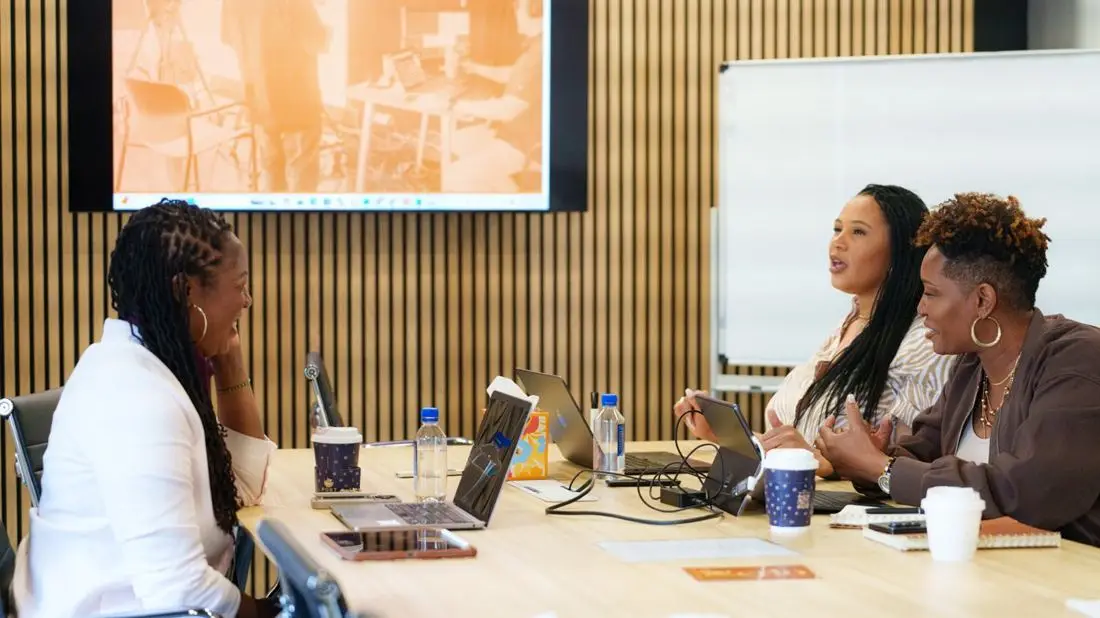
Day 1 · building the show
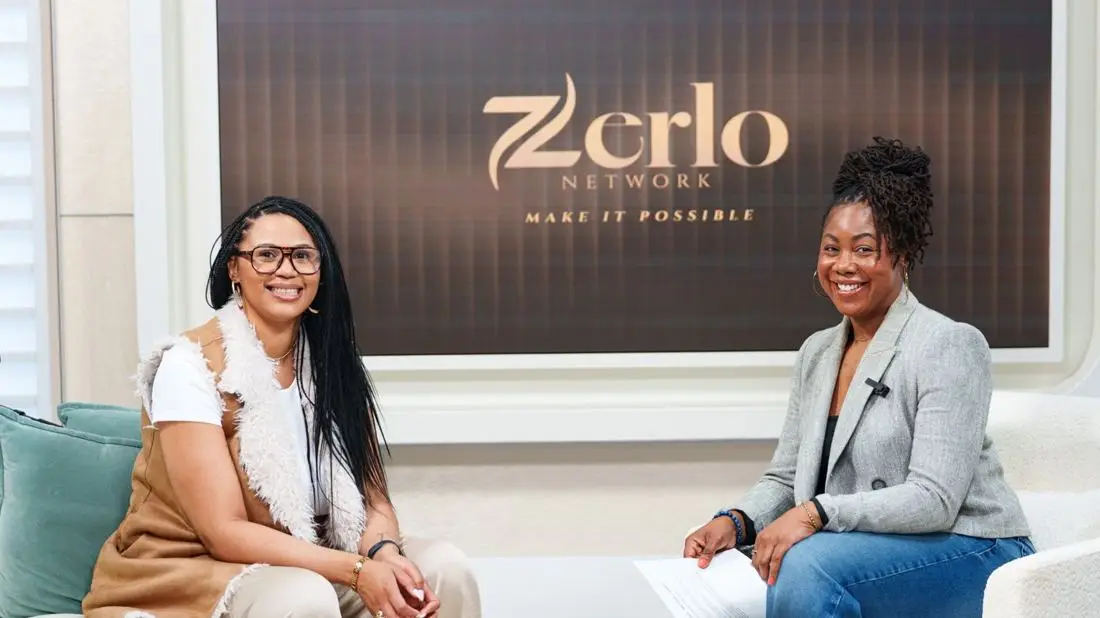
Day 2 · building the host
her first time on a teleprompter ↑
The starting point
Shayna Renee is an executive leadership coach. She had never been on TV and, in her words, hosting a show was “never on my bingo card.”
The job: turn her expertise into a series people would watch on Roku, Amazon Fire and YouTube, and get her ready to host it.
What came out
An eight-episode season that premiered August 27, 2026, with ten guests promoting the launch and a live watch party. Season 2 episodes are already planned.
What I built
A two-day show development workshop · “Host Lab”
Day 1 builds the show
Who the viewer is and what they believe, the promise the show makes them, 30+ episode ideas, a guest list, and the first eight episodes.
Viewer→Promise→Episode ideas→Guests→Season
A two-day show development workshop · “Host Lab”
Day 2 builds the host
Practice interviews with live coaching, teleprompter training, talking to sponsors, and a recorded testimonial at the end.
Confidence→Interviewing→Timing→Sponsors
How I teach interviewing
Catch the vague words
Guests say “it was hard” or “everything changed.” The host learns to stop on those words and ask what they actually looked like.
hardchangedtoxicgrew
- What specifically?
- How did that show up?
- What was the first sign?
I call it the Anti-Vague Filter.
The show bible and launch
A 24-page guide, then a launch plan
The bible covers the show's promise, a detailed picture of the viewer, and the conflict behind each episode. The launch plan had ten guests posting in three waves, built around a premiere graphic everyone could share on day one, so no one waited on edited clips.
2days in the room
30+episode ideas
8episodes released
10guests in the launch
“I'm walking away with a kind of confidence that I didn't have when I came into the door.”
Shayna Renee · Host, The Grounded CEO
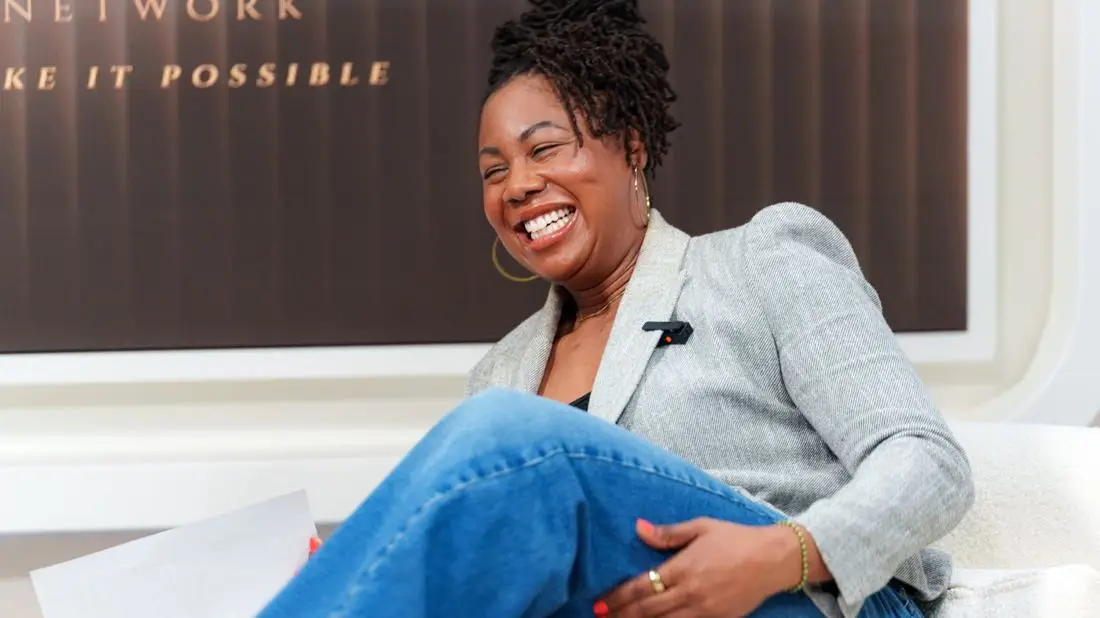
after the second take
Case study 02 · Creative directionOngoing · weekly
YouTube · @thearielledavis
My own show
Where I'm the client, so every choice is mine.
A weekly YouTube show about why creating content consistently is hard. I write it, host it and set the whole visual direction, and I built the systems that let one person publish every week.
The call I made
No tips. Every video names the hidden reason behind a problem the viewer thinks they have.
pages from the Creative Direction Kit, a free guide I designed ↑
What I built
The look
A brand guide with separate rules for video and for print and web, and a fixed set of color pairings that rotate so no two pieces look the same. On screen, words sit right on the footage with a swipe of color and a few handwritten notes.
The ideas
The recurring patterns the show names are written down once and reused, so each video builds on the last instead of starting from scratch. YouTube's replay data shows those are the moments viewers watch again most.
The method, taught
A free guide that teaches creators to direct their own visuals instead of copying someone else's, in five steps.
The Creativity Staircase
Free guide
Get the Creative Direction Kit
The full guide these pages come from: my brief, how I collect references, how I built my color palette, and the rules for my on-screen graphics. You also get new videos by email.
Send me the kit
one video a week, written, hosted and art-directed by one person.

Case study 03 · Messaging strategyConsulting firm · 2026
Brand messaging
Messaging Architecture Sprint
Giving a consulting firm one clear way to say what it does.
My role: strategist and facilitator. I designed the sessions, interviewed the founder and wrote the messaging.
The problem
The client was a change-management consultancy about to rebuild its website. The founder rated her team's ability to explain the company in one sentence a 2 out of 10.
Everyone on the team described the work differently. The founder knew she over-explained it herself. In sales conversations, that meant prospects left unsure what they would actually be buying.
What they needed
One set of language the whole team could use: a short statement of why the firm exists, a clear description of what it does, simple ways to explain it in conversation, and values the team could actually make decisions with.
The call I made
Most consulting firms lead with people or with systems. This one should lead with intention.
In plain terms: start every engagement by getting clear on what the client is actually trying to achieve, before touching their team or their processes. The founder called this their difference but wasn't sure where it belonged in the story. I put it first and drew it as one picture the team could point to.
How I did it
Session 1 · Draw it out
An in-depth interview with the founder about how working with them should feel, what clients really get, and where she gets stuck explaining it.
“What do clients hire you believing you do that you actually don't do?”A question I asked
Session 2 · Shape it
Mission, values written as rules for making decisions, what sets them apart, and the founder's own story of why the firm exists.
“What behavior would be unacceptable here, even if it were profitable?”A question I asked
Between sessions · Draft and explain
I drafted every piece and left notes in the margins explaining each choice, so the founder could see the reasoning and push back on it.
“My job is to be watchdog for over-explanation and bloat, because it confuses and overwhelms people.”My note to the founder
I call this process Distilled Expression.
What I wrote, and what the founder chose
For the homepage and stage
Why they exist
Playful on purpose, so it sounds like them and not like every other consultancy.
“[The firm] exists to help organizations tackle big, hairy, messy, sometimes a little scary problems so important work and the people it serves can truly thrive.”A line I wrote · the founder's pick
For proposals and executives
What they do
The problem, the likely causes and how they help, in one sentence a buyer can repeat.
“[The firm] helps organizations clarify their intention, see where the work starts to stall across people, priorities and systems, and co-create the changes that bring the work back to life.”A line I wrote · the founder's pick
For podcasts and conversation
How to picture it
Simple comparisons anyone on the team can use without a script, each one built around light to match the brand.
“When a flower isn't blooming, you don't blame the flower. You look at the light, the soil, the water.”A line I wrote · the founder's favorite
Decision anchors
Values only help if people can use them in the moment. The team's values went through several rounds. The final six each come with questions anyone can ask themselves before a decision, so not every call has to go back to the founder.
Movement
We take the next reasonable step. We don't pause when something is undefined if forward action is possible.
- Do I know the next reasonable step?
- Am I waiting for clarity I don't actually need yet?
- Is this something I can move forward and adjust if needed?
Questions I wrote · one of six values
The result
The firm went from a team that each described the work differently to one set of language for every setting: the homepage, proposals, executive conversations and casual introductions.
The founder chose my drafts as the strongest options for both her mission and her description of what the firm does.
WritingNewsletters · social posts · bios
Ghostwriting
In someone else's voice
Newsletters, social posts and bios for founders and leaders, written the way they talk.
Every line below was written by me, in the client's voice, and published under their name.
Army veteran turned agency founder
The brief: a LinkedIn bio, a newsletter and posts for a marketing agency founder who spent 22 years as an Army First Sergeant. He wanted to sound like he leads, not like he markets.
The voice: blunt, competitive, all pressure.
“I don't run an agency. I run a lab. A battlefield. A machine built to dominate.”
“You hired me to build leverage that lasts. This isn't fast food. This is infrastructure.”Lines I wrote for him
Leadership program for women of color
The brief: fill the waitlist for a leadership program before enrollment opened. A three-month retainer: four newsletters and twelve social posts every month, all delivered.
The voice: warm, grounded, says the hard thing gently.
“There's a bag you're carrying that you never packed. You didn't choose it. You didn't buy it. You didn't even know it was yours until it started weighing you down.”
“We don't need bigger rooms. We need braver ones.”Lines I wrote for her
DEI speaker
The brief: a newsletter and posts that made a hard workplace topic feel human, for an audience that included skeptics.
The voice: direct, funny, unafraid.
“It's not ‘Who has to lose?’ It's ‘How do we make sure everyone wins?’”
“While others fear losing a slice of the pie, some of us haven't even been allowed in the damn kitchen.”Lines I wrote for them
My own newsletter
A weekly email I wrote to my own list of about 260 people. Most email lists see a few percent of readers click. Mine averaged fifteen.
41%average opens
15%average clicks
a small list that actually reads it.